

You post the date and venue for the spring meeting on a Tuesday evening. By Thursday it sits under 80 replies about parking and somebody’s birthday. Then three members message you privately to ask when the meeting is. That’s usually the moment an organiser sees that the chat has too many messages for the news to survive in it. We don’t think the answer is asking people to post less. We’d change where the news lives.
Why members mute the group
Nobody decides to ignore the club. They mute the group because their phone buzzed forty times during dinner, and most of it wasn’t for them. Volume is the first reason. In a club of 200 people, a handful of keen posters can fill a screen every hour.
Off-topic threads are the second. A question about one event turns into a debate about the last one, and replies pile up for people who were never at either.
And then there’s late-night chatter. Two members who work shifts talk at 1 a.m., and everyone else wakes up to notifications they can’t follow. We wouldn’t call any of this bad behaviour. It’s what a busy chat does when talk and news share one space, and once people mute the group, your announcements go quiet along with the jokes.
An announcements group where only admins post
The most common fix is a second group where only admins can post. Members join it and read it. News arrives on its own, so a notification from that group means something, and people learn to leave it unmuted.
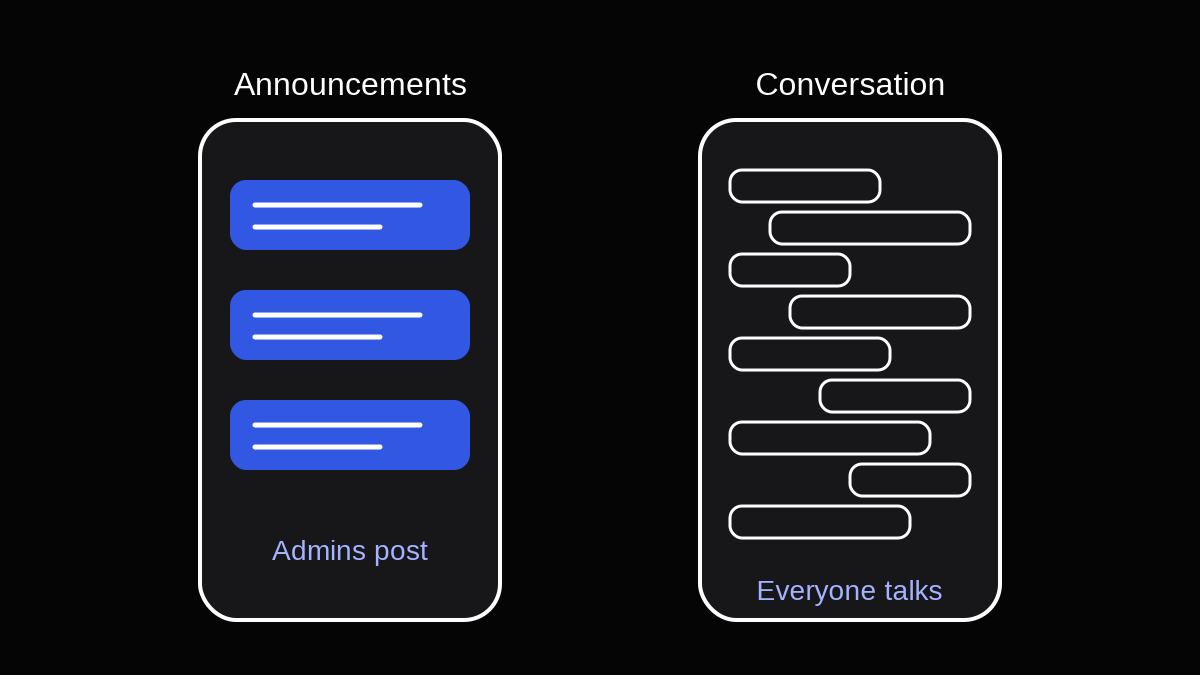
It costs you something, though. Members can’t ask a quick follow-up under the notice, so questions land in the main chat or in your private messages. You also have two groups to keep tidy: when someone leaves the club, you remove them twice, and the person who forgets that second step is usually you.
We’d keep the announcements group short and dull on purpose. A date, a place, a change of plan. If a notice needs discussion, end it with “questions in the main chat, please”, and the talk has somewhere to go. One more habit we like: post at the same rough time each week, so members know when to look. The steps for admin-only posting differ by app and change with updates, so check the app’s current settings before you promise members how it will work.
Keep conversation in one place
Once news has its own home, resist the urge to split the talk too. A group for football, one for the book circle, one for the summer trip: it sounds organised, and three months later two of them are silent and nobody knows which one to use.
For most clubs one chat for conversation is enough. Splitting by topic starts to make sense when the club is large and the subgroups barely overlap, say a walking section that meets weekly and a committee that never walks. Even then, our first question is simple: will someone actually look after this group? If the answer is a shrug, don’t open it. An unattended subgroup is where strangers linger and old arguments restart without anyone noticing.
House rules that cut the noise
Rules work when they fit on one screen and you can point to them in a pinned message.
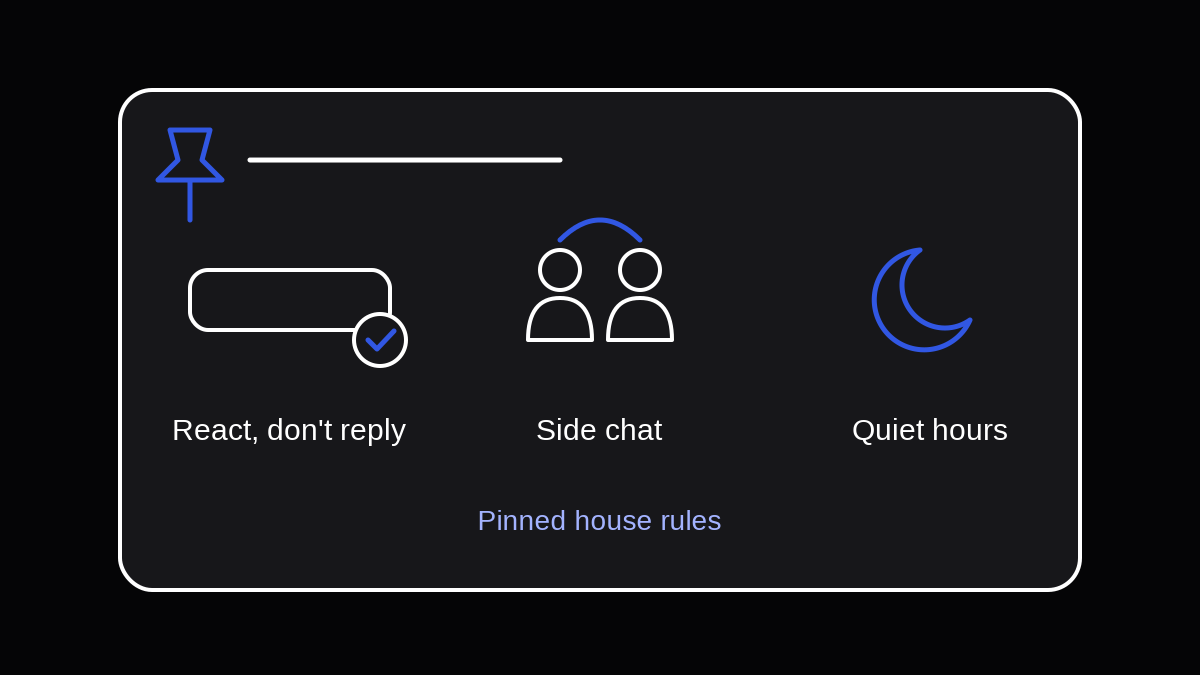
These three do most of the work:
- React to a message instead of replying “thanks”.
- Take a side conversation between two people into a private chat.
- Keep quiet hours from 10 p.m. to 8 a.m. unless something is urgent.
Keep it that short. A long list gets skimmed, and a short one gets quoted back to people who break it, which is exactly what you want. We’d also have the organiser follow the rules first, visibly, for a couple of weeks. Members copy what admins do far more than what the pinned message says.
Checking it worked
Give the new setup a month. Then ask members, in the main chat and in a short notice, one plain question: did you miss anything the club announced?
The answers you’re looking for come from the quiet members, not the regulars. If older members or newcomers still hear about events late, look at the notices themselves. Maybe they run too long, go out at odd hours, or sit in a group half the club never joined. Ask a couple of people directly. They’ll tell you more in a private message than in front of 150 others, and one honest reply beats a poll nobody answers.
FAQ
Should we just use a channel?
It depends on whether you want replies. A channel is one-way broadcast: admins post, members read, and members can’t reply underneath. That suits a large club with lots of news, but members who want to ask something will still need somewhere to talk.
What if people ignore the rules?
Start with a friendly reminder in the chat that doesn’t name anyone. If the same person keeps at it, send them a private word, calmly and once. Most people adjust when they’re asked directly.
A room the organiser shapes
We built WLP Chat around problems like this one. In a WLP Chat room the organiser sets the rules and the roles, and members read them in the invite link before they join, so house rules aren’t a pinned message people scroll past. You decide who posts news and who can invite others. You can read how that works on WLP Chat for organisers. Messages are end-to-end encrypted, and an independent security audit is planned, not done yet. If your club has too many messages and 50 to 500 adult members, get started and we’ll reply within two working days.