

A new member joins your club’s chat on a quiet Sunday evening and scrolls up. Then keeps scrolling. Three years back they find an argument about the summer fair, a phone number someone posted by mistake, and jokes from people who left the club long ago. None of those people agreed to be read by a stranger, and nobody in the club ever decided they should be.
We think that choice belongs to the group. Here’s how to make it without a fight.
Why the default is forever
Most group apps keep every message unless someone changes a setting. That’s a sensible default for a chat between two friends. For a club of two hundred adults, it means the history grows with every season and nobody ever looks at what’s in it.
So the forever setting was never a decision. It was the absence of one. The organiser who created the group years ago probably never saw the option, and the members who joined later had no say at all.
What the group actually needs to keep
Ask your committee what they’d miss if the chat history vanished tonight. The honest answer is usually short: the date of the next meeting, a few decisions, and a couple of documents someone shared.
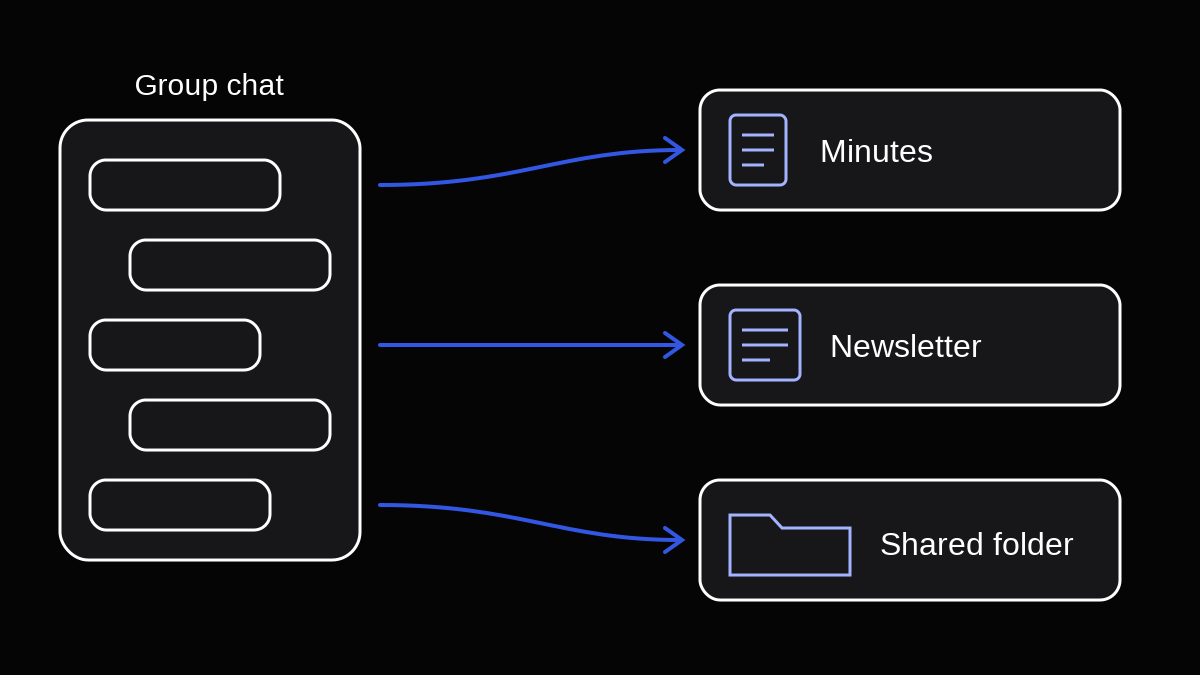
None of that belongs in the chat. Decisions go in the minutes. Dates go in the newsletter or the calendar. Documents go in a shared folder with a name people can find. Once those three have a home, the chat can go back to being what members use it for, which is talking.
We’d rather an organiser spends one evening setting up that archive than spends years hoping nobody reads back too far.
Picking a retention rule
There’s no single right period. A busy social chat with fifty messages a day can live with a few weeks: what was said about Saturday’s walk doesn’t matter by the following month. A committee chat moves slower and refers back more, so a few months is often the better fit.
The trade-off is plain. A shorter period means less old talk lying around and less to worry about if a phone is lost. It also means members can’t scroll back to find the address someone posted in spring, so set up the archive before you shorten anything.
We won’t tell you what the law requires. That’s a question for your committee and, if needed, an adviser. What we can say is that message retention is a choice your group can make on purpose.
Disappearing messages
Some apps have a feature called disappearing messages. Once it’s on, new messages are removed after a set time. In some apps that’s a day, in others it can be weeks. The options and the menus differ between apps and change between versions, so check the app’s current settings before you promise members anything.
One catch people miss: in most apps it covers messages sent after you switch it on. Three years of old history stays where it is until someone deletes it.
Telling members before it starts
Don’t switch it on overnight. Write the new rule next to your other rules, in one sentence: how long messages stay, and from which date. Then post it in the chat with at least a couple of weeks’ notice.
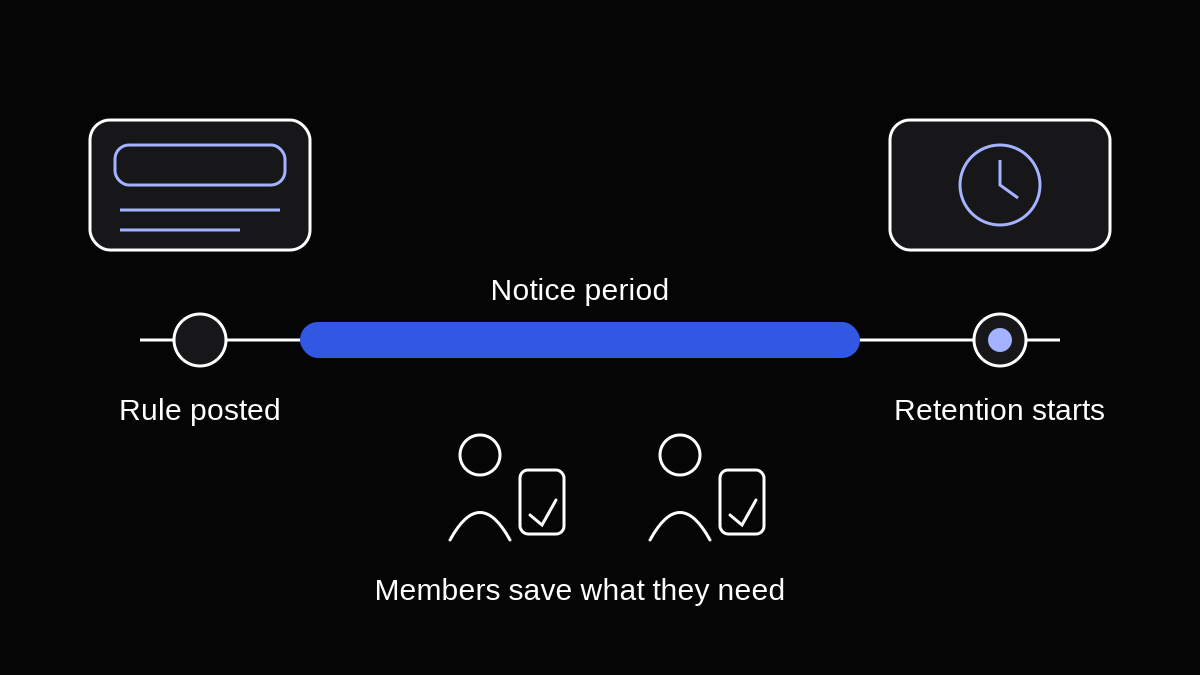
That gap matters. Members who saved a recipe, a photo from the dinner or a contact they still need get the chance to keep it first. And nobody wakes up to find half the chat gone and assumes something went wrong.
What retention does not do
A retention rule limits what the group keeps. It doesn’t stop a member taking a screenshot, forwarding a message or copying text into a note. Depending on the app, it may not remove copies already backed up on someone’s phone either.
So treat message retention as tidying, not as a lock. People should still post as if a message could outlive the period.
FAQ
Does our club have to delete messages by law?
We can’t advise you on the law, and the answer depends on where you are and what your club does. Ask your committee or an adviser who knows your type of organisation. All we describe here is the choice and how to carry it out.
Can members keep their own copy?
Yes. A rule limits what the group stores, not what a person remembers or writes down. If something matters to a member, they’re free to save it before the period runs out.
Who decides the period?
The committee, in our view. Agree on it at a meeting, note it in the minutes and write it down with the rules so new members see it on day one.
Retention in a WLP Chat room
In WLP Chat, retention isn’t a hidden setting. The organiser writes it down along with the room’s purpose and rules, and the invite link shows all three to members before they join. Nobody discovers the message retention period by accident three years later.
A word on where things stand. Messages are end-to-end encrypted, and an independent security audit is planned but not done yet. You can read more about privacy and security on our FAQ page.
If you organise a group of 50 to 500 adults and want your rules, retention included, written down before anyone joins, tell us about your organisation and we’ll reply within two working days.