
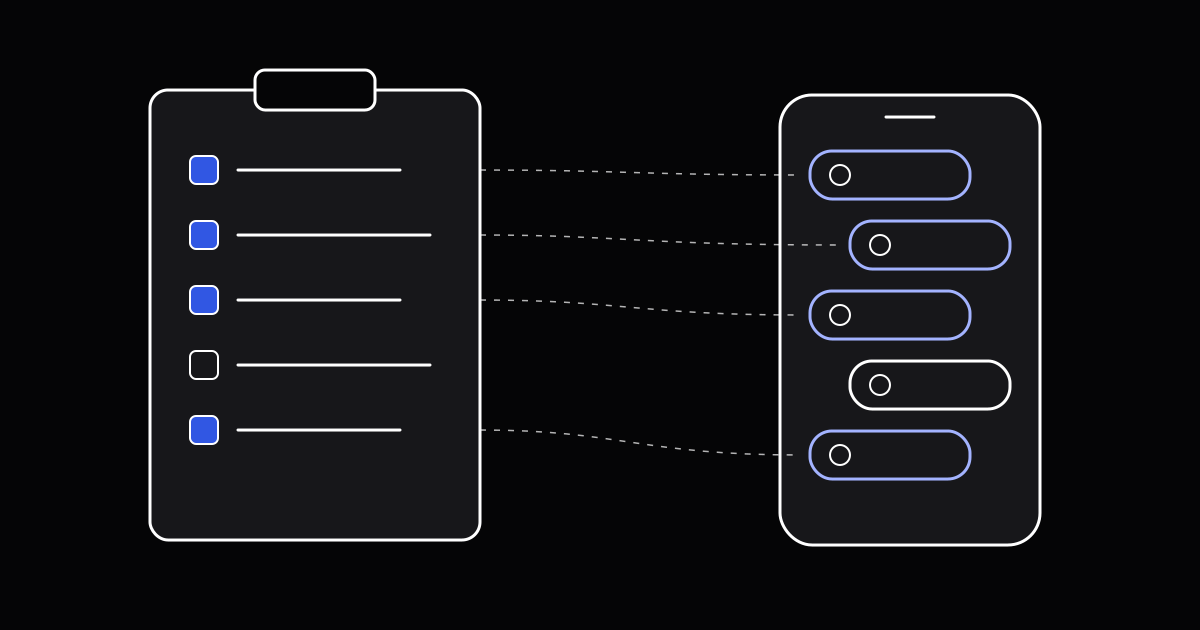
The treasurer sends round the renewal list: 140 names, all paid up for the season. Then someone opens the club’s group chat and counts 212 people in it. Who are the other 72? Nobody on the committee can say for sure. Some stopped paying three years ago. One or two nobody has ever met. It’s a common picture in clubs that have run on a chat app for a while, and it’s fixable in an evening with a spreadsheet and a cup of tea.
Why the two drift apart
Nobody plans the gap. A new member gets added to the chat at their first event, before the subscription is sorted, and the payment never quite happens. Someone else lets their renewal lapse in March and stays in the chat because removing people feels unfriendly. And phones change. A member gets a new number, joins again from it, and the old number sits in the list for years, owned by goodness knows whom.
None of this is anyone’s fault. It’s what happens when the chat is open to whoever an admin adds, while the money lives in a spreadsheet only the treasurer opens. Two lists kept by two people, with no moment in the year when anyone puts them side by side.
Decide which one is the record
Before you touch either list, settle one question with the committee: which one is the truth? Our answer is always the same. The membership list decides, and the chat follows it.
That’s where payments and consent already live, and it’s usually what your constitution and your insurance refer to when they say “member”. The chat is a place where members talk, nothing more. Once the committee agrees on that, every awkward case gets easier. You’re no longer deciding about Olena or Mark as people. You’re applying a rule the committee wrote down, and you can say so.
Match the two once a season
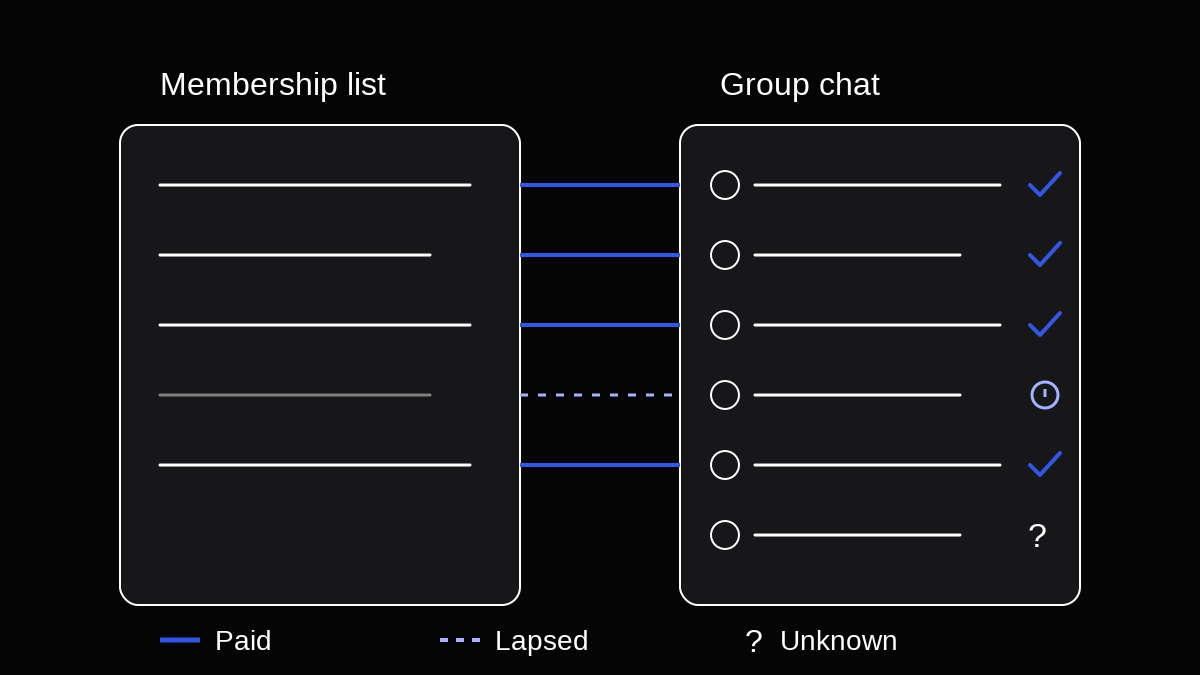
Pick a quiet week, ideally just after renewals close. Copy the names from the chat’s member list into a column next to the treasurer’s spreadsheet; on a large group that’s a slow job on a phone, so we’d do it on a laptop. Then go down the column and mark each person as paid, lapsed or unknown. Most will be paid, which is reassuring, and it means the real work is a short pile at the bottom.
Display names in a chat rarely match the names on a payment record. “Ivan K” might be Ivan Kovalenko, and a flower emoji could be anyone, so both need a second look, so do this with someone who knows the members by sight. If you’ve had a clear-out before for a different reason, our guide on how to remove inactive members covers the removal side in more detail. Here the question is narrower: is this person a member or not?
What to do with lapsed members
Write to them first, privately, not in the group. One friendly message: your renewal ran out, this is how to pay, and if we don’t hear by the end of the month we’ll take you out of the chat. Then keep to the date, because a deadline you don’t keep teaches everyone to ignore the next one. We’d never name lapsed members in the group chat. It embarrasses people who may have forgotten, and it starts arguments the committee doesn’t need.
Names you cannot place
These matter most. Before you remove anyone, ask around: who invited this person? Often it’s a member’s friend who came to one barbecue and never left. Sometimes nobody knows at all, and that’s your answer.
Keep them matched between seasons
The fix that lasts is boring. One volunteer adds people to the chat, and they add only people who are on the membership list. A new member pays, the treasurer tells the volunteer, the volunteer sends the invite. No side doors, not even for a friend of the chair.
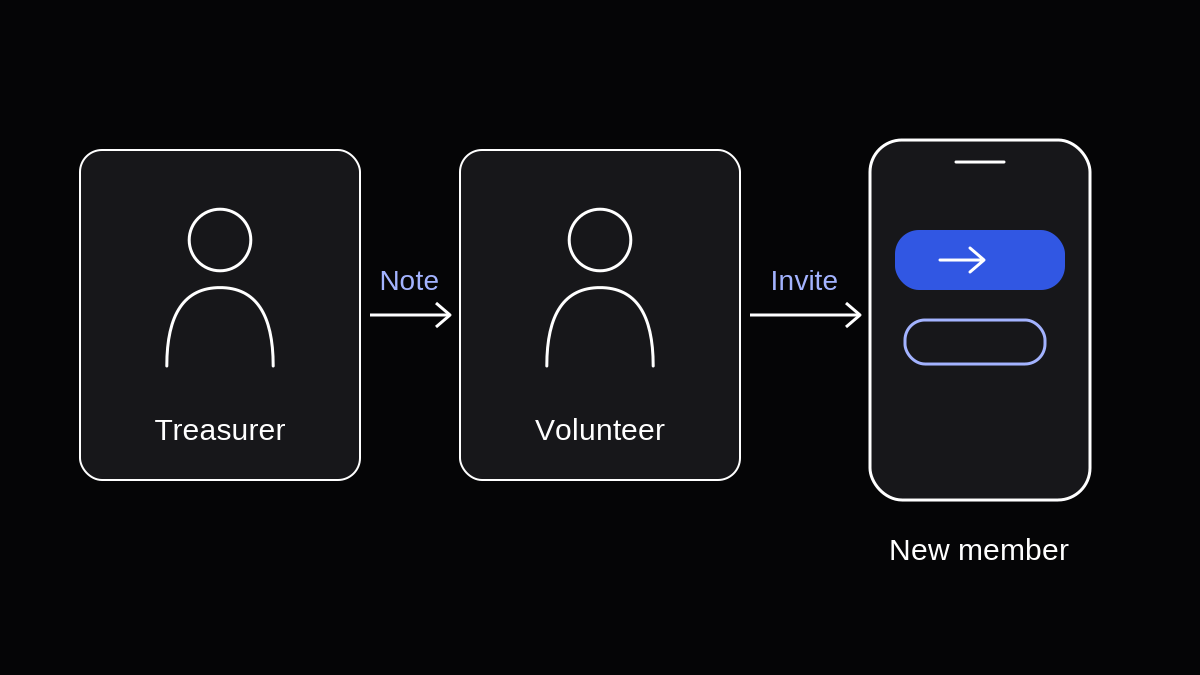
When someone renews late, the treasurer drops the volunteer a note so they aren’t removed by mistake. When someone resigns, the same note goes the other way. That’s two minutes a month for the pair of them, and next season’s check takes half an hour instead of an evening.
FAQ
Should non-paying partners or volunteers be in the chat?
That’s the committee’s call, made once. Some clubs welcome partners and helpers, others keep the chat to paying members only. Write the decision into the chat’s rules, so the organiser isn’t judging each case alone at eleven at night.
Is it rude to remove someone who has not renewed?
Not if they’ve had a warning and a clear date. Most people expect it, and plenty are relieved to stop getting notifications. A short private message beats a silent removal every time.
A room that starts from the list
We built WLP Chat around this exact problem. In a WLP Chat room the organiser sends invite links that expire. The invitation chain then shows who brought whom, so an unknown name always has an answer. Members read the room’s rules in the invite link before they join, and nobody shares a phone number with anyone. End-to-end encrypted. Independent security audit planned. If you organise a group of 50 to 500 adults, get started and we’ll reply within two working days.