
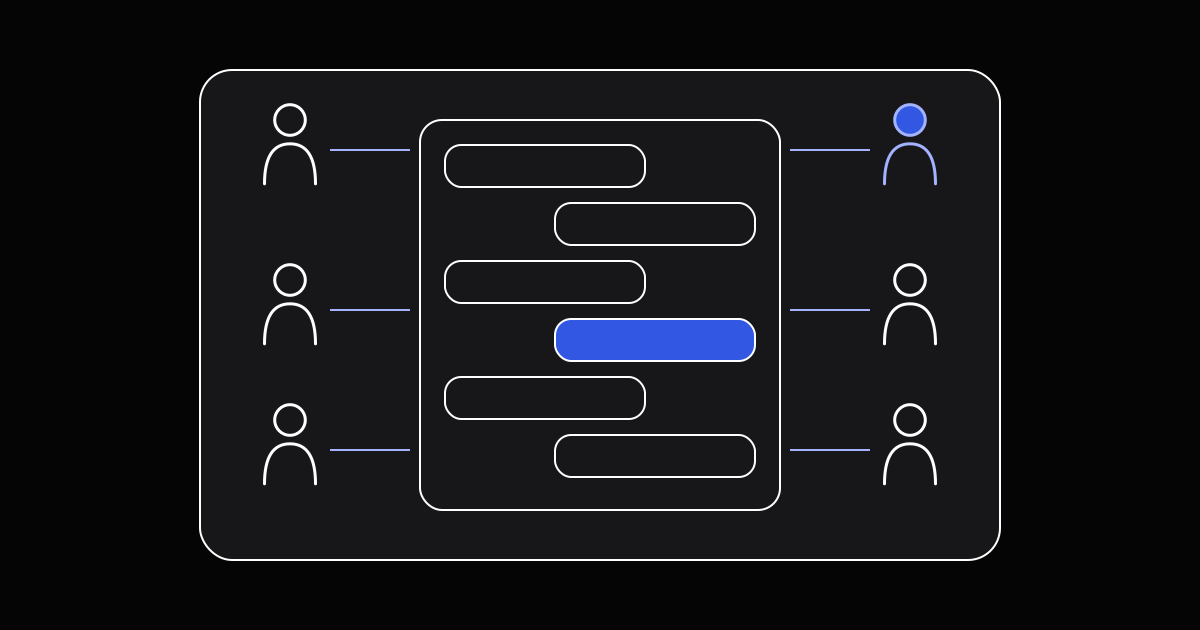
A woman joins her city’s alumni network on a Sunday evening. By Monday morning she has three private messages: one from a man asking where she lives now, one selling insurance, one that just says “hi” with a heart. She’s met none of them. She doesn’t complain to the organiser, because what would she even say? She mutes the group and stops reading. We left direct messages out of WLP Chat because of mornings like that one.
Where unwanted messages come from
A large group does two things at once. It shows everyone who else is in it, and in most messaging apps it lets anyone write to anyone privately. Put those together in a group of 300 adults and somebody will use the member list as a contact list.
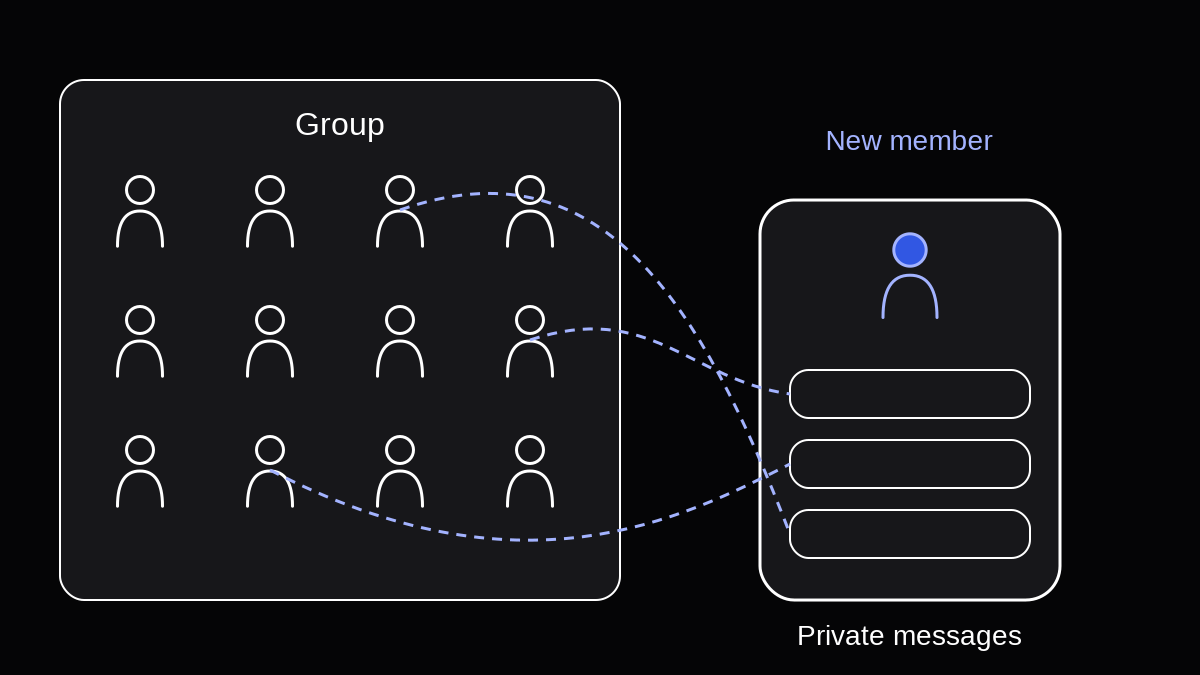
Most of the people doing it aren’t villains. Some are lonely, some are selling, a few are worse. But the member on the receiving end can’t tell which is which from a first message, and the organiser usually never hears about it. The stranger is still in the group the next day, writing to the next new face. And because a private message leaves no trace in the group, the organiser has nothing to go on even when a rumour reaches them at the next meeting.
We don’t think better rules alone fix this. A rule that says “no unwanted messages” asks the member to decide what counts, and then to be brave enough to report it. New members are the least likely to do that: they don’t know the organiser yet, and they don’t want to start their first week with a complaint. Diaspora and alumni groups feel this most, because joining is often how someone new to a city meets people at all.
What we built instead
In a WLP Chat room everyone talks in the room. There’s no second, hidden channel between two members, so there’s no place where the organiser’s rules stop applying.
That changes the feel of the group more than people expect. A member who wants to ask the treasurer something asks in the room, and the next person with the same question reads the answer. The organiser doesn’t have to repeat the meeting time to twelve people one by one. Someone who’d have sent a creepy message has to say it where 200 people and an organiser can see it, and most don’t bother.
It isn’t free. Some members miss the quick private word, and we’ll come to that below. A busy room can also feel louder at first, so the organiser’s rules on what belongs there matter more, not less. But we’d rather start from a room where every message sits under the same rules than add private messages and then try to police what nobody can see.
What organisers can act on
When something goes wrong in the room, a member can report it, and the report carries the messages that member chose to include. The organiser sees the evidence and doesn’t have to take anyone’s word for it.
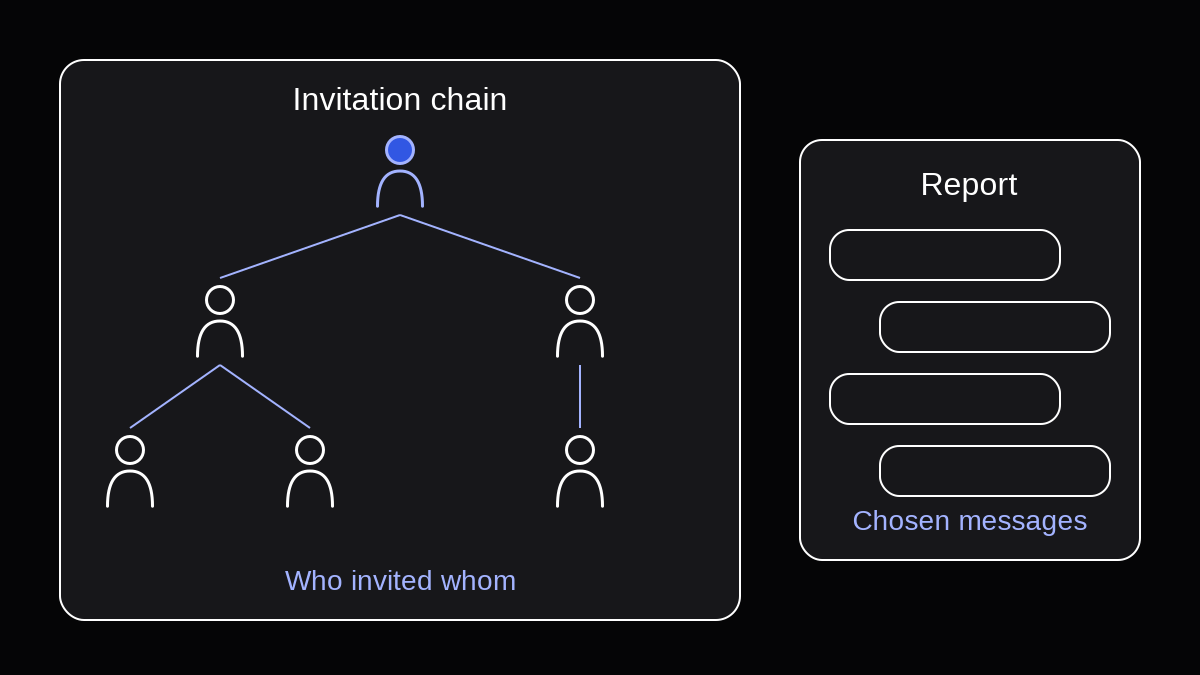
Then there’s the invitation chain. Every member came in through someone, and the organiser can see who invited whom and revoke an invite when it’s been misused. If one person keeps bringing in people who cause trouble, that shows up.
Both depend on the problem happening where the organiser can see it. In a group with private messages, the worst behaviour happens off stage, and an organiser can’t fix what they can’t see. That’s the plain reason behind our choice. A report built from the room’s own messages is something a committee can discuss calmly, with the facts on the table, instead of one member’s word against another’s. You can read more about the tools on WLP Chat for organisers.
What members do when they need a private word
People still need one now and then. Two members arrange a lift to the summer picnic, or someone wants to talk about a personal matter with the chair.
Our answer is old-fashioned. Members who know each other swap phone numbers or emails in person, or ask in the room and agree to share them. It’s a choice both people make, not something a stranger gets by joining. And the organiser is always reachable in the room itself, so nobody needs a back channel to raise a problem.
Is this slower? A little. But nobody’s number is handed out without their say, and a member who leaves the group doesn’t leave a trail of private conversations behind with people they’d rather not hear from again.
FAQ
Will direct messages be added later?
We’re not promising either way. Rooms have no private messages today, and the organisers using them will tell us whether members miss them. Anything we change would come with the organiser in control.
Can two members still talk privately?
Yes, outside the app, if both agree. WLP Chat doesn’t share anyone’s phone number or email, so swapping details is up to the two of them.
Trying a room without private messages
End-to-end encrypted. Independent security audit planned. We’re looking for organisers who’d like to see how their group behaves when every conversation happens in the open, under their rules. We read every request ourselves. If you organise a group of 50 to 500 adults, get started and we’ll reply within two working days.