
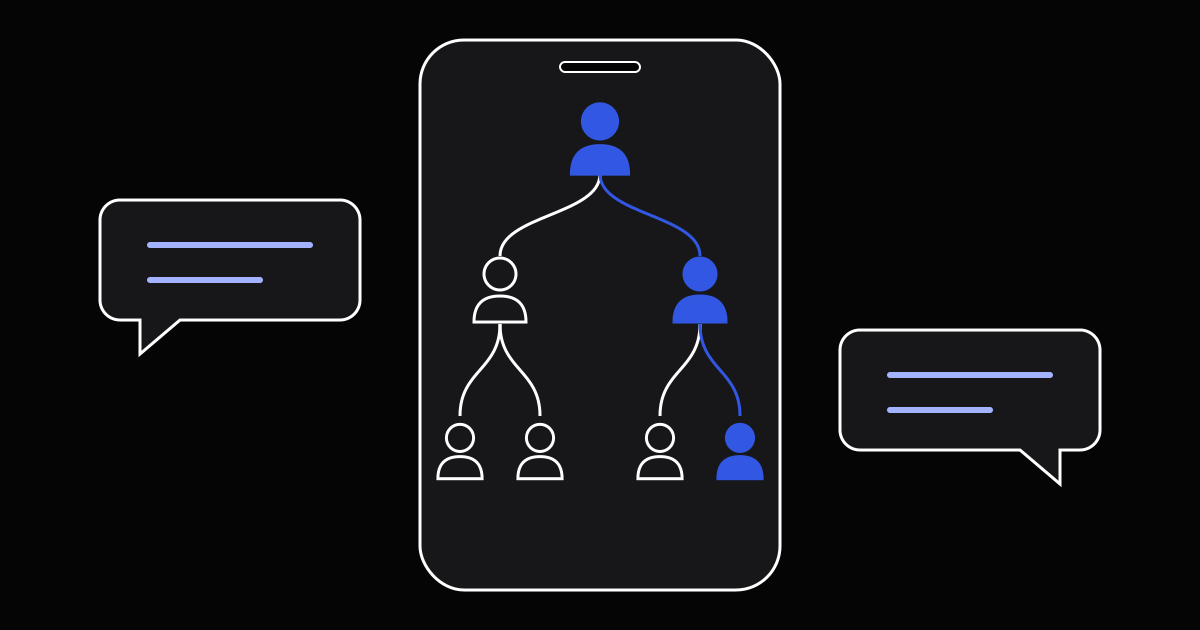
It’s a Tuesday evening and you’re scrolling the club chat on the bus. Someone called “Dmytro K.” has just replied to the AGM notice. You don’t know him. You ask the committee. Nobody does. He might be a member’s cousin or a new volunteer. He might also be someone who found a forwarded link on a noticeboard. In a WLP Chat room you don’t have to guess, because every member got in through a person who’s already there, and the room remembers who that was.
The question every organiser has asked
Who brought this person in? Anyone who’s run a group of a few hundred people has typed some version of that into the committee thread.
Most group apps can tell you who’s in the group right now. Some show who added a member by hand. But once a shared join link is pasted into a newsletter or forwarded twice, the trail usually goes cold. You can’t tell whose hands it passed through on the way. So you end up messaging the stranger to ask, which feels awkward for both of you, or you leave it and feel uneasy every time they post.
Our view is simple. This question deserves a plain answer, recorded at the moment someone joins rather than pieced together months later from three people’s memories of a WhatsApp thread.
How the chain is built
Nobody joins a WLP Chat room by searching for it. There’s no directory. A person needs an invite link from someone who’s already inside, and that link is tied to the member who made it.
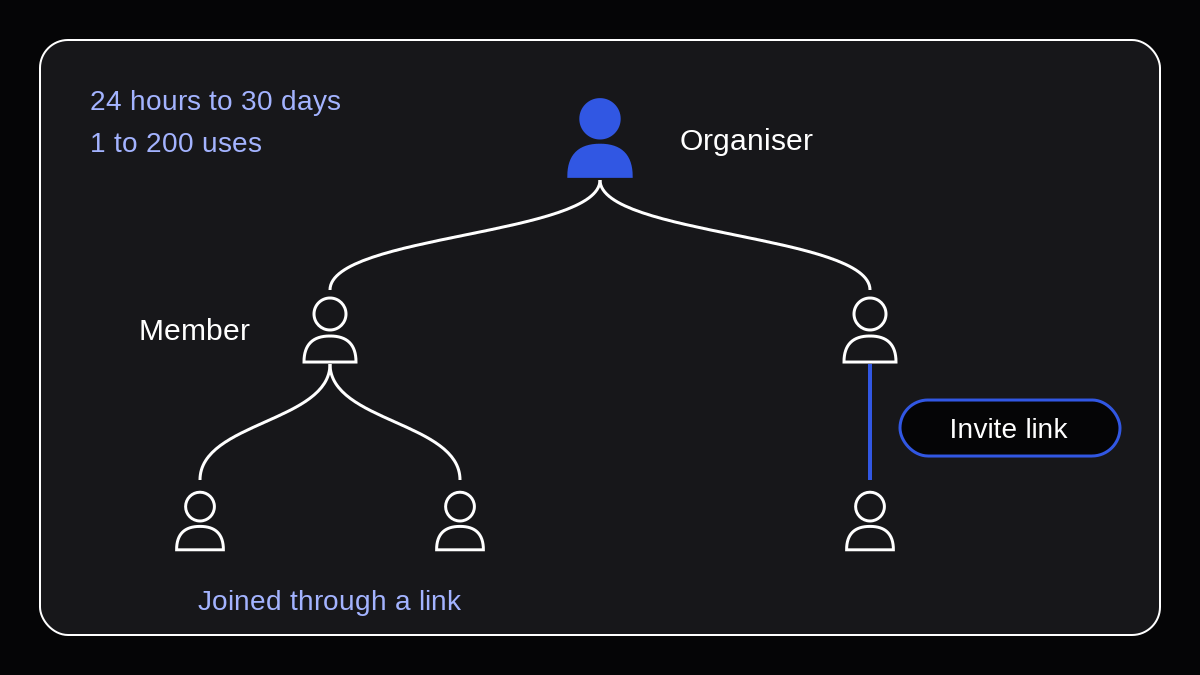
Each link has limits set when it’s created. It lasts somewhere between 24 hours and 30 days, and it can be used from once up to 200 times. So a link meant for one new member at Saturday’s meeting can be single use and gone by Sunday. A link for a whole intake of new alumni might allow 40 uses over a week, and then close itself whether or not anyone remembers to tidy up.
When someone opens the link, they read the room’s purpose, rules and retention in the invite link, accept them, and pick a name for that room. At that point the room records which link they used and who issued it. Repeat that for every member and you get the invitation chain: a tree that starts at the organiser and branches out through everyone who’s invited someone since. Nobody has to fill in a form or keep a spreadsheet. The record is a side effect of joining.
What the organiser sees
Open the invite manager and you see who invited whom, laid out as a chain. Next to each link you see its status: how many uses are left, when it expires, and whether it’s been revoked. So “Dmytro K.” stops being a mystery. You can see he came in through a link a long-standing member made last week, and you can ask that member over coffee rather than quizzing a newcomer in public.
What you don’t see matters just as much. The organiser never sees a member’s phone number or email, because nobody shares them in WLP Chat in the first place. You also don’t see the names a member uses in other rooms. The chain shows “Dmytro K.” as he appears here, and nothing from anywhere else. Our page on WLP Chat for organisers lists the rest of the organiser’s view.
Revoking a link, and what happens next
Say a moderator notices that an invite link for your diaspora association has been posted in a public Facebook group. You open the invite manager and revoke it. From that moment the link stops working, and anyone who tries it is told it’s been revoked and to ask the person who invited them.
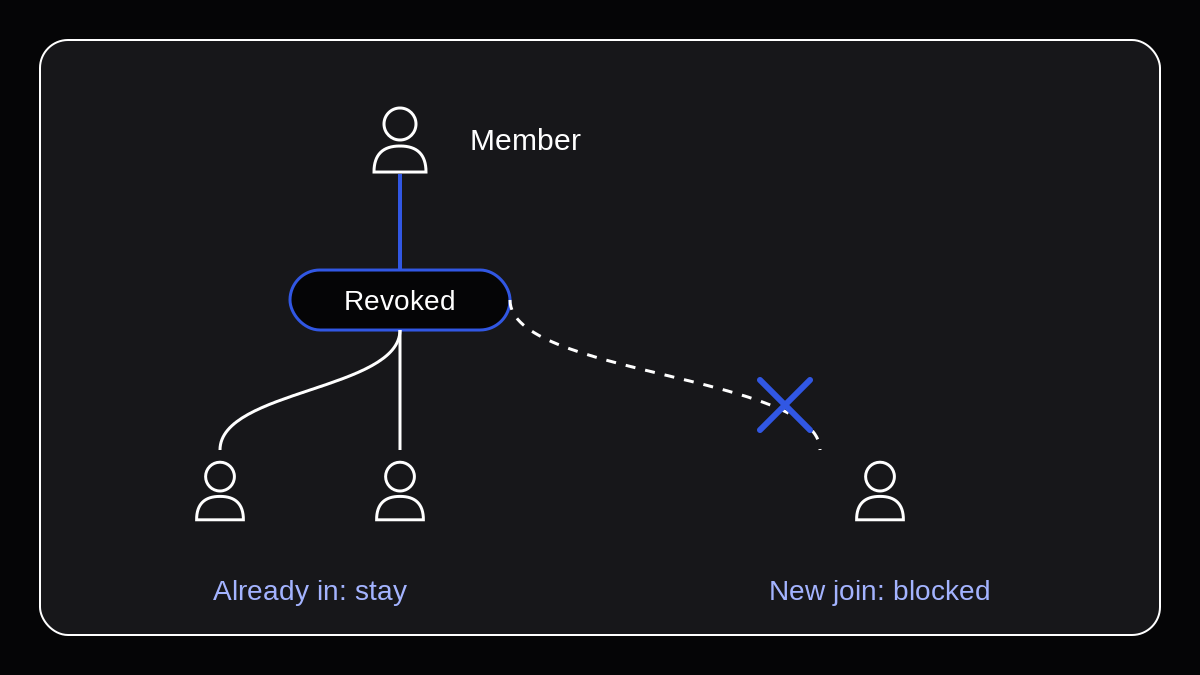
What about the people who already joined through it? They stay. We made that choice on purpose. A leaked link doesn’t mean everyone who used it is unwelcome, and some of them may be exactly the people you wanted. The chain shows you which members came in through that link, so you can look at the list, check with the member who made it, and decide person by person. Removing someone is the organiser’s call, not an automatic side effect. If you want fresh access for the members who should be there, issue a new expiring link with fewer uses and send it directly.
What the chain is not
It’s not a window into anyone’s messages. The invitation chain records how a person arrived, and that’s all it records.
It’s also not a ranking. A member who’s brought in 30 people isn’t scored higher than someone who’s invited nobody, and there’s no leaderboard for anyone to chase. We’d worry about a feature like that: it would reward handing out links, which is the exact habit that lets strangers drift into a group. The chain is there for the organiser’s audit when something looks wrong, not for daily comparison. On a quiet week you may not open it at all, and nothing is lost by that.
FAQ
Can members see the chain?
The chain is built as the organiser’s view: who invited whom, and the status of every link. That’s the part we’ve designed. If what members can see changes, we’ll say so in the release notes.
Get started
We’re talking to organisers about what the invitation chain should show them. If you organise a group of 50 to 500 adults, get started and we’ll reply within two working days.