
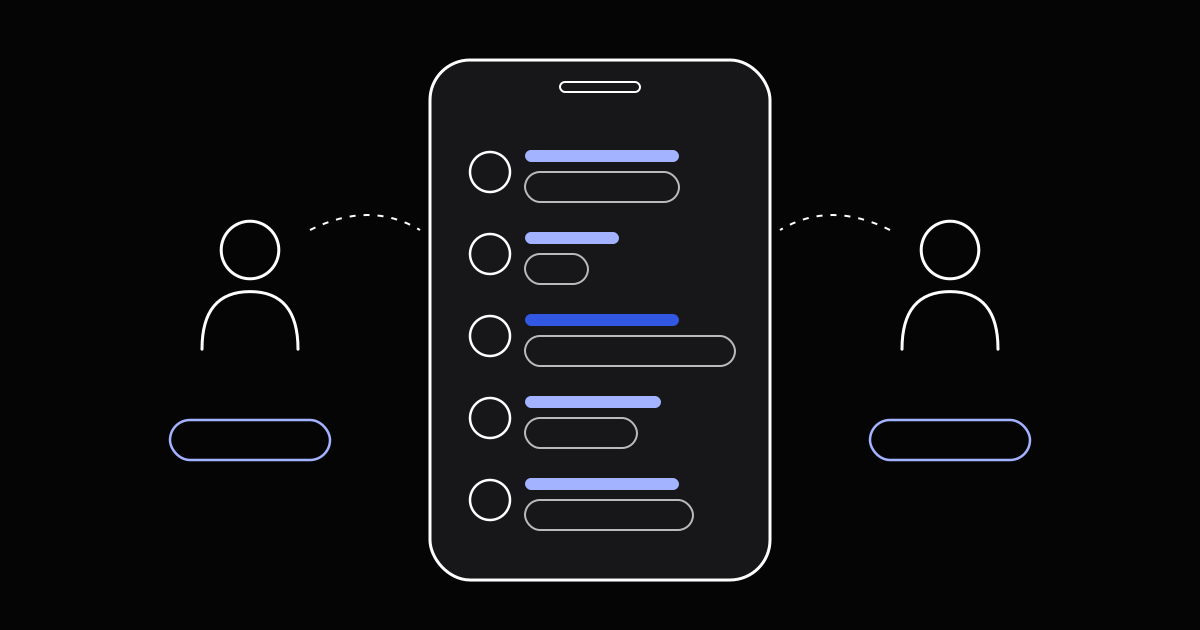
You post the date of the spring meeting and twenty people reply. Most are names you know. Then there’s “Mum”, there’s “J”, and there’s a phone number with a thumbs up. Who are they? You can probably work out two of them. The third could be anyone. That moment is usually when an organiser starts wondering whether the club group chat needs a rule about names at all. We’d say it does, and it’s a short one.
Why the question comes up
It comes up because two fair wishes pull in opposite directions. Members want to know who they’re talking to. A treasurer asking for subs, or a volunteer offering a lift to the away match, gets a better answer when people can see a full name next to the message.
But plenty of members don’t want their surname in front of 300 people they’ve never met. One has a public job. Another left a difficult situation and keeps a low profile online. A third just doesn’t like it, and we think that’s reason enough.
Neither side is being awkward. In a chat of this size, trust doesn’t come from a surname on the screen. It comes from knowing someone vouched for each person. Privacy comes from not showing more than people need. A good rule gives both, which is why we’d settle it on purpose rather than let every member of the group chat guess.
Three naming rules that work
Full names. Everyone shows their first name and surname, the way they’d sign a club form. It works well for small committees, sports clubs where people already meet every week, and professional alumni networks where the surname is half the point. It works less well once the group is large and mixed, because the people most worried about privacy stop posting and only read.
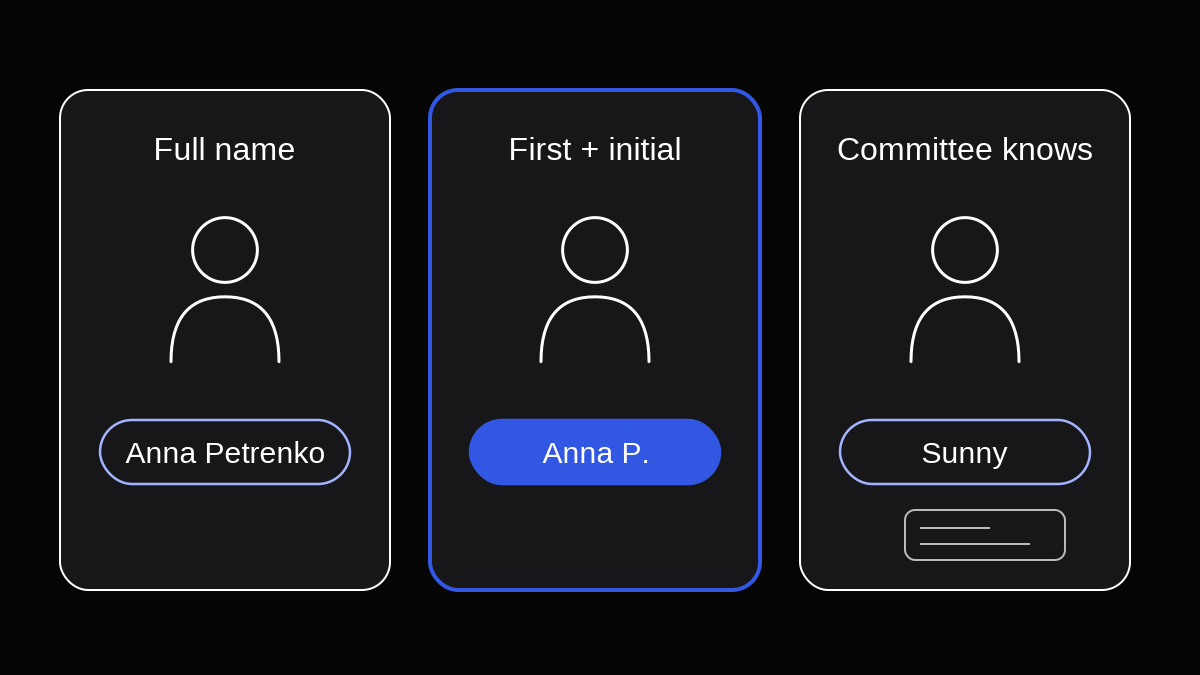
First name plus initial. “Olena K.” or “Mark T.” is enough for members to tell two Marks apart and address each other politely, and it keeps the surname out of a list that can be screenshotted. For most associations of a hundred or more people, this is the rule we’d suggest first. It’s easy to explain in one line and easy to check at a glance.
A name the committee knows. Members may use a nickname or display name of their choice, as long as the organiser or the membership secretary can match it to a person on the membership list. This suits diaspora groups and any club where some members have good reasons to stay low-key. The club still knows who’s in the room. The room doesn’t need to. The catch is work: someone on the committee has to keep that list current, and it falls apart the first time a new admin lets people in without asking.
Who needs to know who is who
Here’s where many groups get it backwards. Not every member needs to know everyone’s identity. The organiser does, and so does whoever keeps the membership list, because they’re the ones who approve people, chase fees and remove someone who shouldn’t be there. A member asking about the quiz night doesn’t need the surname of the person who answered.
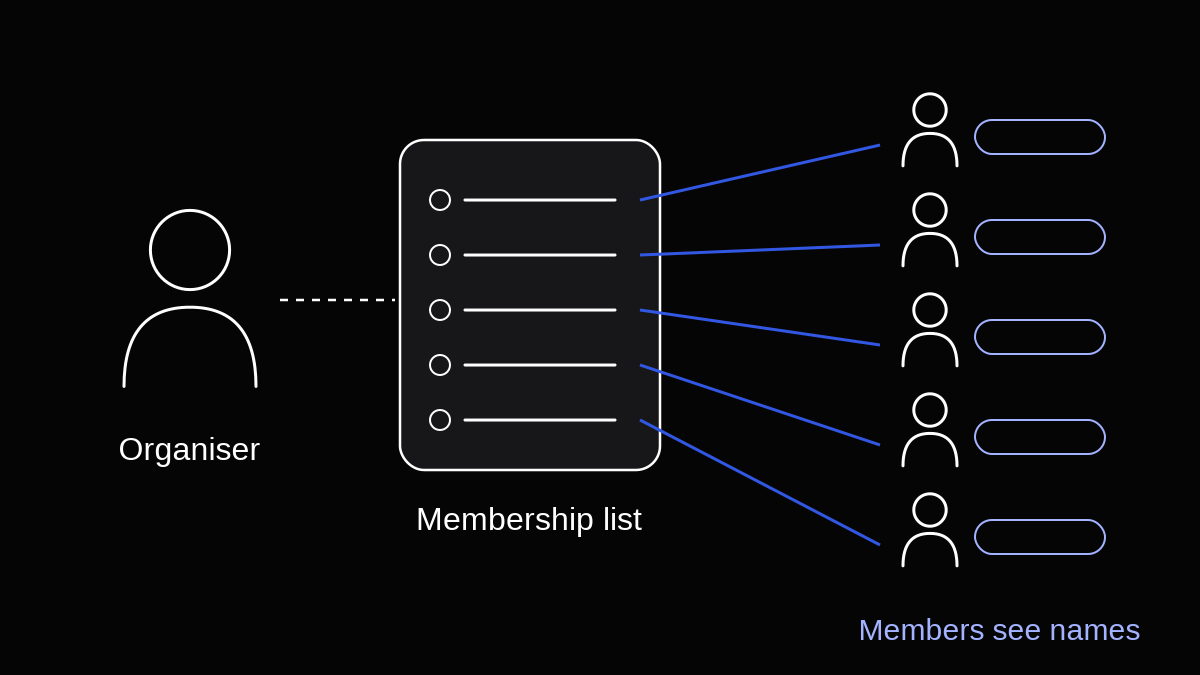
So the question we’d ask is narrower: can the committee match every profile in the chat to a person they’ve admitted? If yes, the name a member shows is mostly a matter of manners. If no, insisting on real names won’t fix that. You’d have a chat full of names that look genuine and still not know who invited half of them. We’d put the effort into the list first and the names second.
Asking members to change their names
One post does it. Say which naming rule the club has chosen, give an example (“please show your first name and the first letter of your surname, like Anna P.”), and set a deadline, say two weeks. Pin it if your app lets you. We’d also post it once more a week later, because a single message gets buried fast.
Where the name is changed depends on the app, and in some apps the name others see is the one saved in their own contacts rather than your profile. Check the app’s current settings before you write the steps, or just tell people to look under their profile.
When the deadline passes, message the few who haven’t changed privately. Don’t name them in the group. In our experience most people just missed the post.
FAQ
Can I make real names compulsory?
You can ask for it, and some clubs do. Say why you want it, for example so members know who’s offering lifts, and offer an alternative: anyone who’d rather not may use a different name as long as the committee knows who they are.
What about members who show only a phone number?
Usually they never set a name, or other members don’t have them saved as a contact. Everyone else sees digits, and in some apps the number itself is visible to the whole group. Ask them privately to add a name, and send them the club’s example so they know what to type.
A separate name in each room
WLP Chat was built around this exact problem. Each member has a room identity: a separate name in each room, chosen by them. The organiser doesn’t rely on that name to know who someone is. Every member arrives through an invitation chain the organiser can check and revoke, so the room always records who invited whom, whatever name appears on screen. Phone numbers and email addresses are never shown to other members. Our FAQ has more on privacy and safety. End-to-end encrypted. Independent security audit planned.
If you organise a club or association of 50 to 500 adults, get started and we’ll reply within two working days.