

Our answer is short: the organisers and a few named committee members, using links that expire. Everyone else who wants to bring someone asks one of them. That can sound strict for a friendly club. But it’s the setup we’d recommend to any group past a hundred people, because it’s the one where the committee still knows how each member arrived. Below is how the usual alternatives play out, and how to put your own invite policy into two sentences.
Three policies groups actually run
The oldest habit is that anyone can add anyone. A member meets a new neighbour at the Saturday market, taps their name, and they’re in. It’s quick and it feels warm, and in a group of thirty people who all know each other, it works fine.
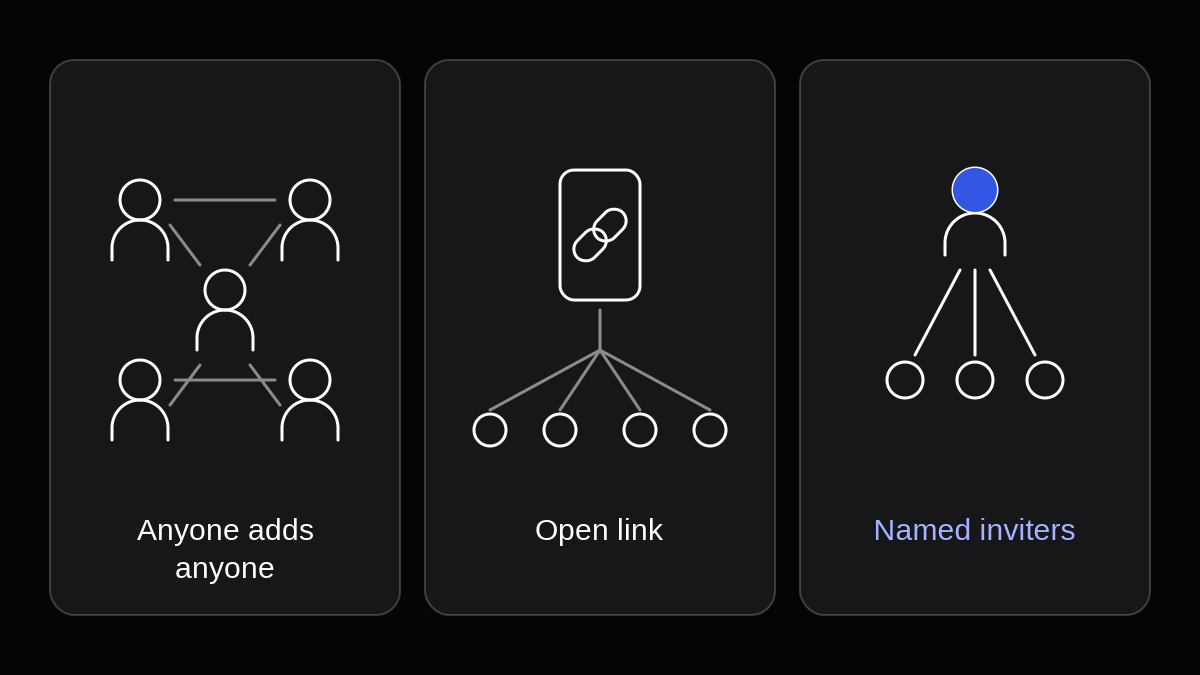
Plenty of clubs post an open link instead. The organiser makes one, puts it in the newsletter or on a poster, and whoever has it can join. No admin has to approve each person, which is why busy volunteers like it.
Then there are groups where only a few named people invite. The committee decides who holds the keys, and newcomers come through them. It’s slower by a day or two. It’s also the only setup of the three where you can say afterwards who let a person in, and that’s why we lean towards it.
What goes wrong with an open link
An open invite link doesn’t stay where you put it. It gets forwarded to a cousin, then pasted into another group, then screenshotted. Six months on, it’s sitting in a chat you’ve never heard of, and it still works.
The bigger problem is what you can’t see. When forty people joined through the same link, nobody can tell who passed it to whom. So when a stranger starts messaging members late at night, the committee has no thread to pull. Most apps let you reset a link; check the app’s current settings for how, because the menus change between versions.
Naming who invites
We’d rather name the inviters in the rules than leave it to whoever happens to be an admin that month. Two organisers and two committee members is usually plenty for a club of a few hundred. Each of them keeps one link per channel: one for the newsletter, one for the meeting door, one for personal messages. If a link leaks, you know which one it was and who owns it.
A member who wants to bring a friend doesn’t get a link of their own. They message an inviter, say who the friend is, and the inviter sends the invite link. That member is now the sponsor member for the newcomer, the person the committee can ask later if a question comes up. In our view, that small step costs a day and saves a lot of guesswork.
Expiry and use limits
Not every link needs the same limits. A link printed in a quarterly newsletter has to last until the next issue and let in quite a few people. A link for one meeting should die the day after and stop once the people in the room have joined. We set the expiry and the use limit to fit the channel, never one default for everything.
Knowing who invited whom
Picture a member who keeps posting things the rules don’t allow, and nobody on the committee remembers adding them. With a record of the invitation chain, you can see which link they came through and who issued it. You can then talk to the right inviter instead of guessing.
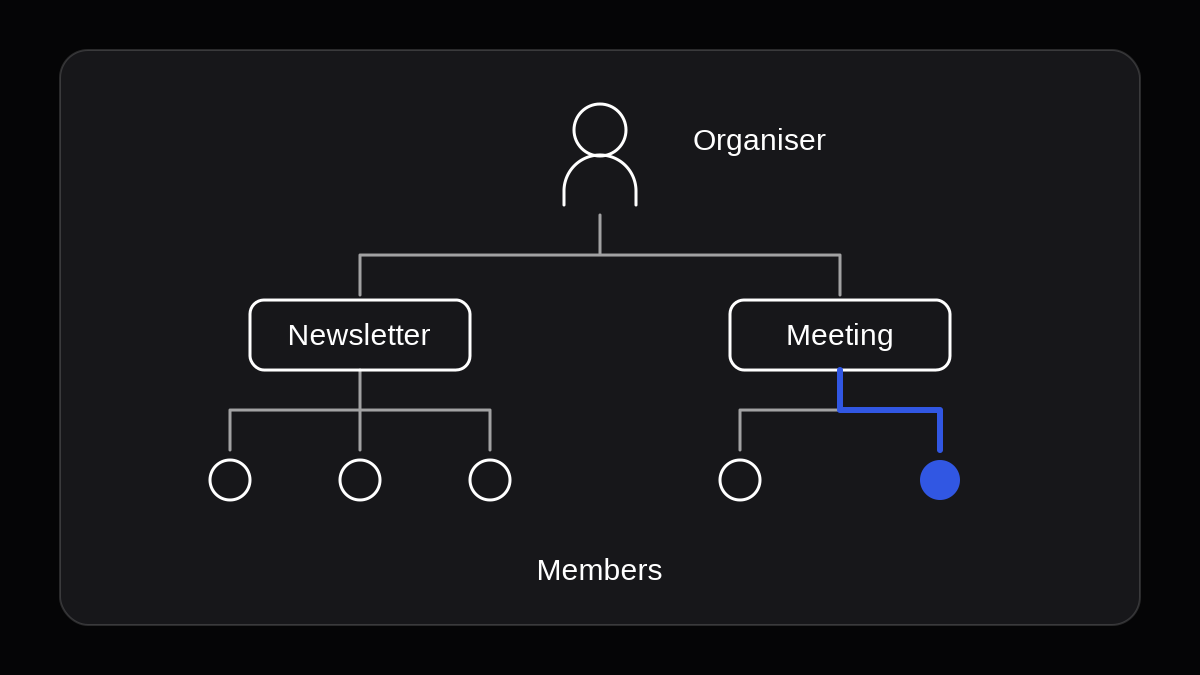
That record matters most on bad days. Most group apps keep none: they show who is in the group, not how each person got there. So clubs end up rebuilding the history from memory, usually in the middle of an argument.
Writing the policy down
Your invite policy belongs in the group rules, in one or two plain sentences that a member can read on a bus. Name the people, say how a friend gets in, and stop there. A rule like this is enough:
New members join through an invite from an organiser or a named committee member. To bring someone, message one of them; links are for one channel and expire.
Pin it next to the rest of the rules so the invite policy is the first thing a newcomer sees, not something they hear about after a mistake.
FAQ
Isn’t a closed policy unfriendly to newcomers?
No. A newcomer still gets in; they just come through a person rather than a forwarded message. And that person usually says hello for them in the first week, which a link never does.
What do we do about a link that leaked?
Revoke it or reset it, then issue a new one for that channel. Tell the inviter who owned it, so they don’t keep sending the old one out.
Should moderators invite too?
Only if the committee names them. A moderator’s job is keeping the conversation in line, and group chat invites are a separate job that some moderators would rather not have.
How WLP Chat handles invites
In WLP Chat, every group chat invite is an invite link. Each one has an expiry and a use limit set by the organiser, every join traces back to the link it came through, and you can revoke one in a tap. Members read the room’s rules before they join and never share a phone number with the room. We’ll be plain about security: messages are end-to-end encrypted, and an independent security audit is planned but not done yet. There’s more on how rooms are set up on the WLP Chat for organisers page. If you organise a group of 50 to 500 adults, tell us about your organisation and we’ll reply within two working days.