

It starts with the venue. One member says the new hall is too far out, another says she spent three weekends finding it, and by nine in the evening 40 members are watching the thread grow. Some add a thumbs up to one side. A few post “can we not do this here”. Nobody knows who is supposed to speak next.
That’s usually you, the organiser. And what you write in the next hour matters more than who was right about the hall.
The first message from the organiser
Keep it short and neutral, and post it in the group where everyone saw the row. You’re not settling anything yet. You’re asking for a pause and moving the talk somewhere smaller.
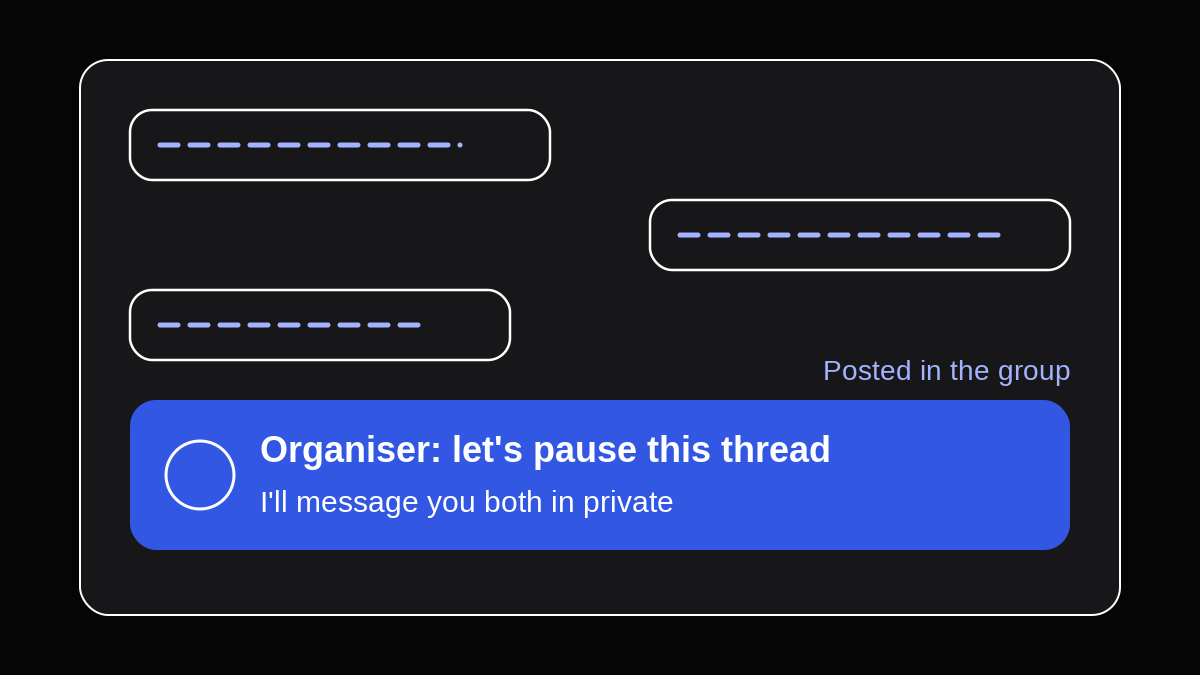
Something like this works: “Let’s pause this thread for tonight. Both points about the venue are fair and we’ll sort it properly. I’ll message you both in private, and the committee will post an update by Friday.”
Notice what it leaves out. It names nobody and gives no verdict. And there’s no “I’m disappointed in everyone”, which reads as a telling-off to the 38 people who only watched. A message that takes a side, even mildly, turns an argument in the group chat into a vote. We’d also avoid jokes here. The tone you set in that one post is the tone people copy for the rest of the evening.
Talking to each side in private
Send each person a private message, separately, and listen before you say anything about the rules. Most heated members want to be heard once by someone who can do something about it. Is that a call or a message? Whatever they’ll answer tonight. A call at ten in the evening can feel like being summoned, so we’d start with a message and offer a call.
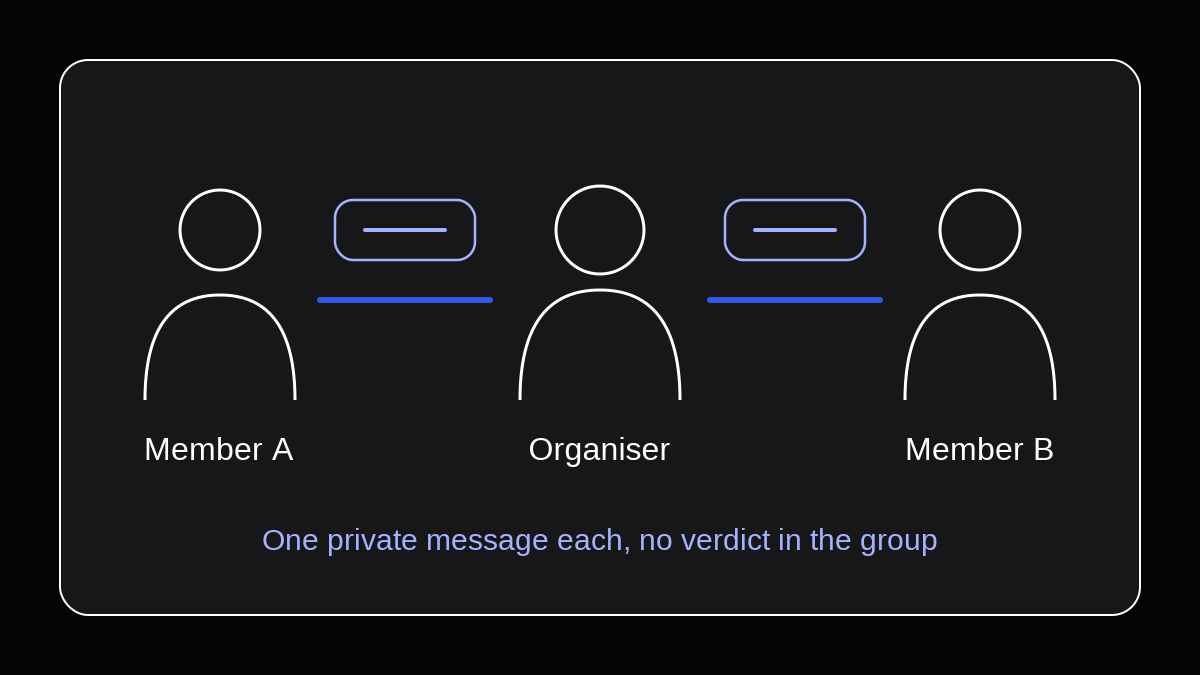
Ask one question each. “What would a good outcome look like for you?” is our usual one. It moves the person from the row to the fix, and you’ll often find the two answers are closer than the thread made them look.
Don’t report back to the group with a ruling. If you post “I’ve spoken to both and Anna was right”, the argument starts again with you in it. Agree the next step privately, then let the decision arrive later through the normal channel, like the committee’s update.
When the group admin should step in harder
Some arguments don’t cool down with a pause. If someone moves from the venue to the person (insults, comments about someone’s family or background) or keeps posting after you’ve asked for a pause, the group admin has to act, not just ask nicely again.
A short break for the whole chat can help. WhatsApp and Telegram both let admins limit posting to admins for a while; check the app’s current settings, because the menus change. Say why when you switch it on: “Posting is closed until tomorrow morning so we can calm things down.” Then switch it back when you said you would, even if one person is still sulking. A silence that runs on for days feels like a punishment for everyone.
Removing a member as the last step
Removing someone is rarely the right move after one bad evening. Warn first, in private, and name the exact rule that was broken. If it happens again, explain once in a private message why you’re removing them, then do it without a public speech.
Keep a short note of what happened: the date and what was posted, then the warning you gave and when. It’s two or three lines in a document only the committee can see. When the member’s friend asks in six months why it happened, you’ll have an answer that isn’t from memory.
After the argument
Close it in public with one line: “Thanks for your patience. The venue question goes to the next committee meeting.” Then go back to normal posts, a reminder about subs or a photo from the last event. The chat recovers faster when people see ordinary messages again.
Then check your rules. Did they say anything about personal comments, or about where disagreements about club decisions belong? If an argument in the group chat caught you without a rule to point to, add one now while everyone remembers why.
FAQ
Should we delete the messages?
Only the abusive ones. Deleting the whole thread looks like hiding the disagreement, and members who missed it will hear a worse version from someone else. Leave the ordinary back and forth and remove insults or personal details.
What if the argument is between two committee members?
Take it off the chat straight away. Another committee member who isn’t involved mediates, ideally in a call or in person. Members expect the committee to disagree sometimes; they don’t expect to watch it, and an apology from both in the next meeting usually closes it.
Rules that are read before anyone joins
Most of the work above happens because the rules came too late, buried in a pinned message nobody opened. In WLP Chat, the organiser writes the room’s purpose and rules, along with who holds which role, and every member reads them in the invite link before joining. So when you ask for a pause, the rule you point to is one they already agreed to.
Messages are end-to-end encrypted, and an independent security audit is planned, not done yet. You can see how rooms and invitations work on WLP Chat for organisers.
If you run a club or association of 50 to 500 adults and want rules that are read before an argument in the group chat starts, get started and we’ll reply within two working days.